|
Principal Researcher at Tencent Hunyuan, working on scaling agents toward both general and specialized intelligence. Previously, I was with Sea AI Lab and Microsoft Research. I’m currently based in Singapore. Feel free to reach out! :) Email / Google Scholar / LinkedIn / Github / Twitter |

|
|
|
|
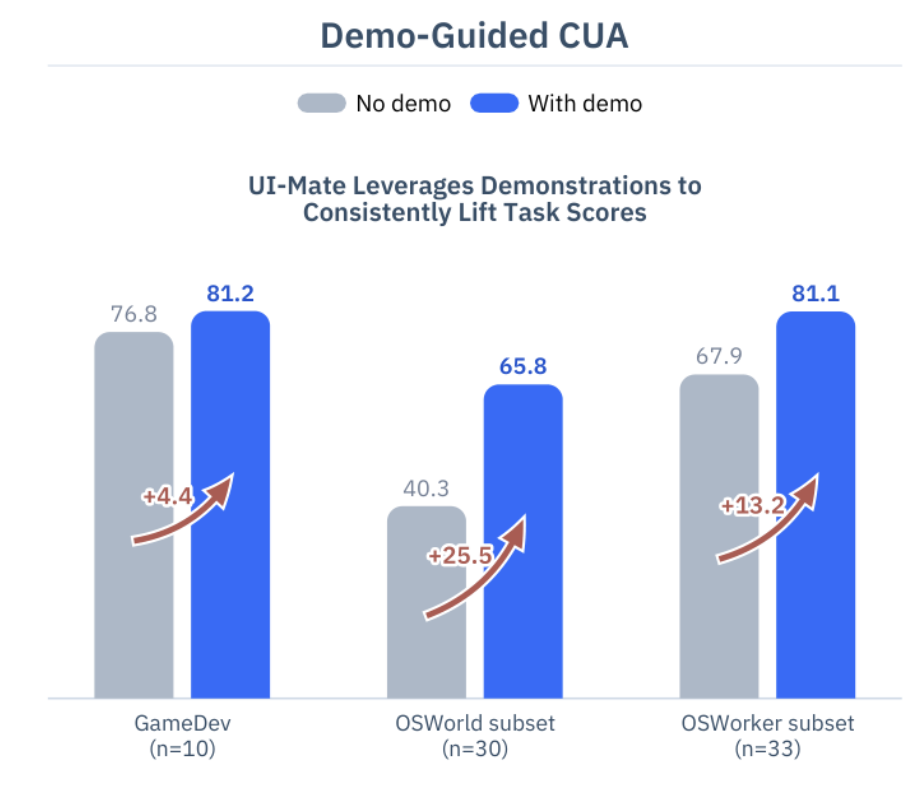
Hunyuan Team Project, 2026 We present an open-weight foundation GUI agent trained with a closed-loop, environment-grounded data flywheel — task and environment construction, filtered rollouts, and SFT with online RL. It achieves 77.0% on OSWorld-Verified and 66.2% on WindowsAgentArena with only 27B parameters, surpassing trillion-parameter baselines. We further introduce demonstration-guided execution, where a single recorded demo substantially lifts long-horizon office task success. In our self-demo evaluation, a single same-task demonstration raises scores from 76.8 to 81.2 on GameDev, from 40.3 to 65.8 on the OSWorld subset, and from 67.9 to 81.1 on the 33-task OSWorkerBench subset. |
|
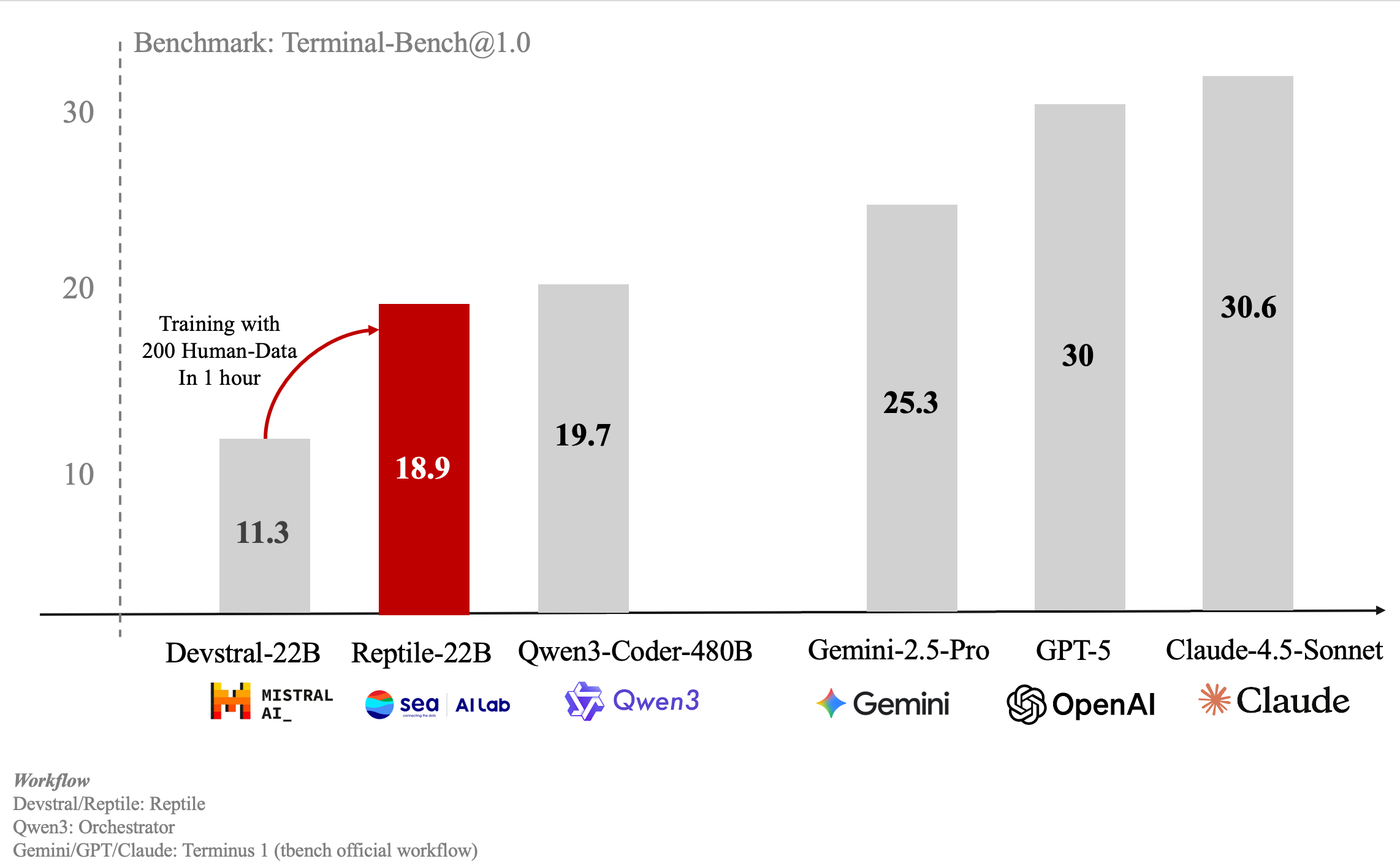
Longxu Dou*, Cunxiao Du*, Shenggui Li*, Tianduo Wang, Tianjie Zhang, Tianyu Liu, Xianwei Chen, Chenxia Tang, Yuanheng Zhao, Min Lin Project, 2025
Compared with other CLI agents, Reptile stands out in two ways:
|
|
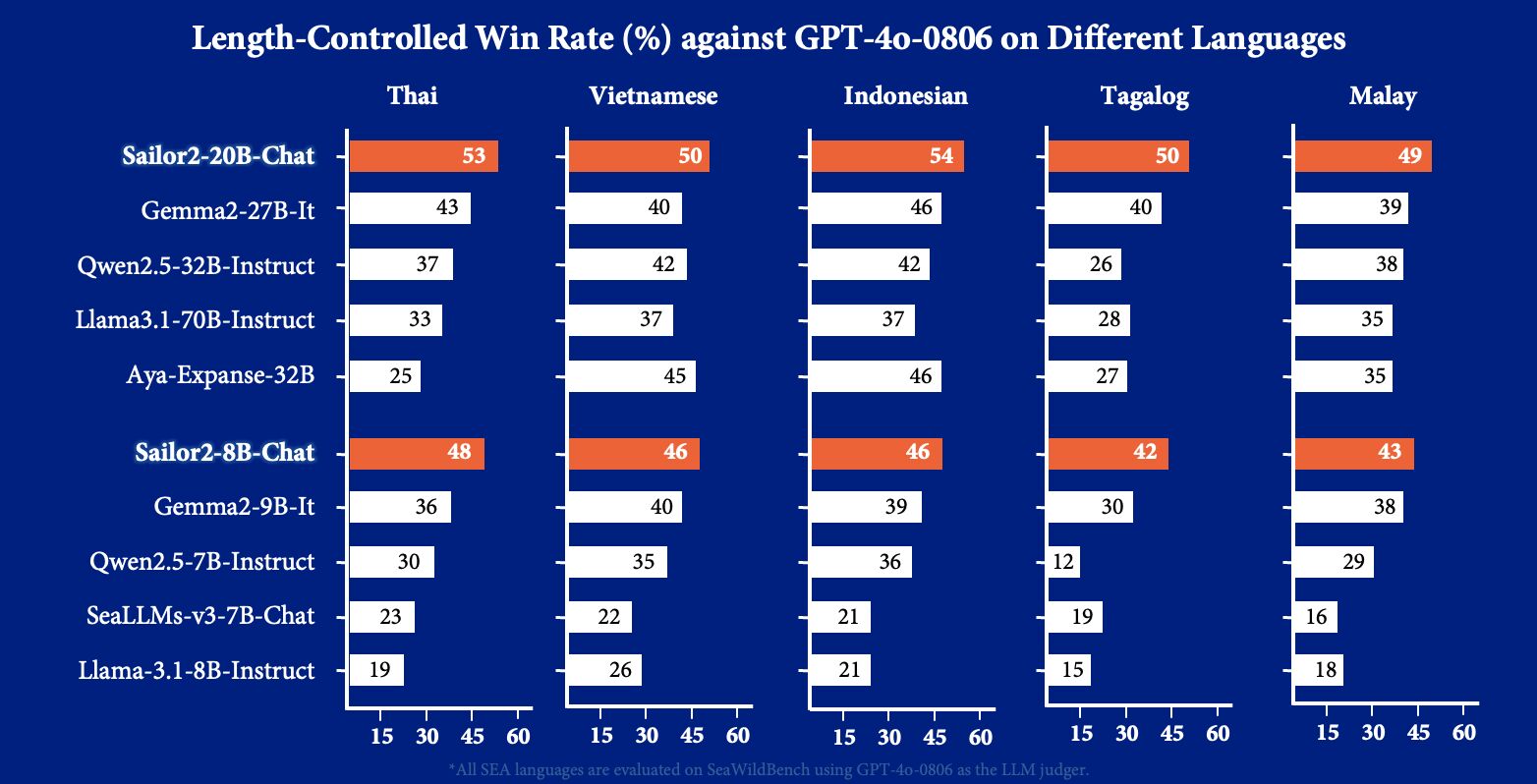
Longxu Dou*, Qian Liu*, Fan Zhou*, Changyu Chen*, Zili Wang, Ziqi Jin, Zichen Liu, Tongyao Zhu, Cunxiao Du, Penghui Yang, Haonan Wang, Jiaheng Liu, Yongchi Zhao, Xiachong Feng, Xin Mao, Man Tsung Yeung, Sailor2 Team Report, 2024 Slides Sailor2 is a community-driven project delivering state-of-the-art multilingual language models at three scales — 1B, 8B, and 20B parameters. Building upon Qwen2.5, Sailor2 is continually pre-trained on 500B high-quality tokens to support 15 languages, including English, Chinese, Burmese, Cebuano, Ilocano, Indonesian, Javanese, Khmer, Lao, Malay, Sundanese, Tagalog, Thai, Vietnamese, and Waray. • Sailor2-20B-Chat achieves a nearly 50% win rate against GPT-4o-0806 on SeaWildBench, matching GPT-4o-level performance in local chat scenarios across South-East Asian languages. • Over 300K downloads since release |
|
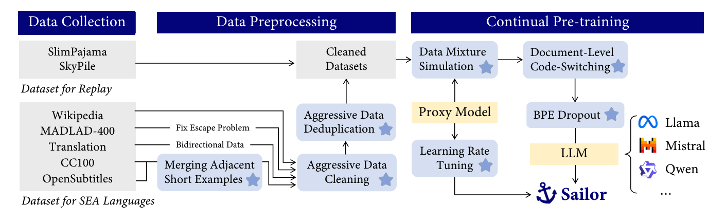
Longxu Dou*, Qian Liu*, Guangtao Zeng, Jia Guo, Jiahui Zhou, Xin Mao, Ziqi Jin, Wei Lu, Min Lin Report, 2024 Slides Sailor is a family of open language models ranging from 0.5B to 14B parameters, tailored for South-East Asian (SEA) languages. Continually pre-trained from Qwen1.5 on 200B to 400B tokens, Sailor primarily covers English, Chinese, Vietnamese, Thai, Indonesian, Malay, and Lao. Training leverages several techniques, including BPE dropout for robustness, aggressive data cleaning and deduplication, and small proxy models to optimize the data mixture. • Over 200K downloads since release. |
|
Design and source code from Jon Barron. |